












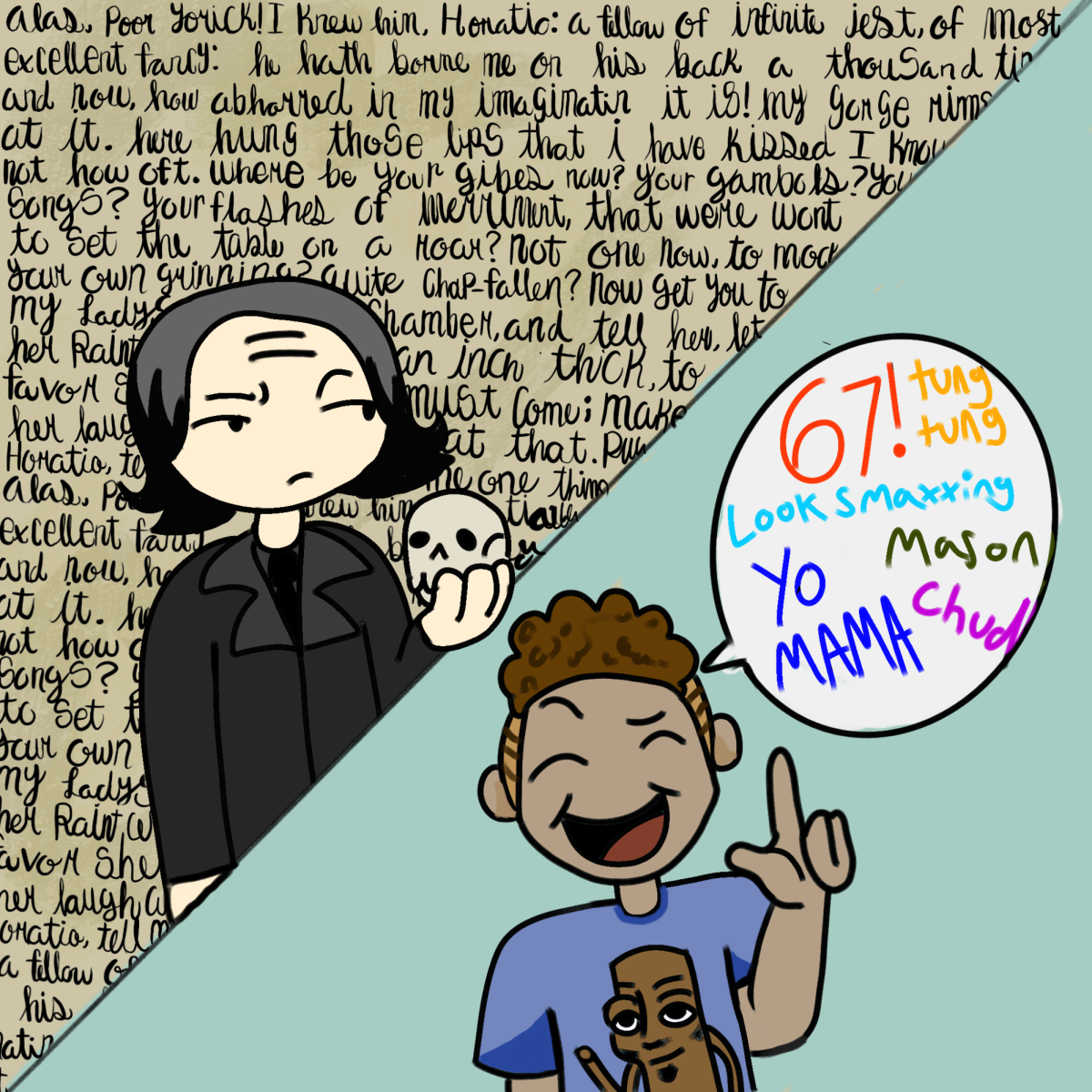

















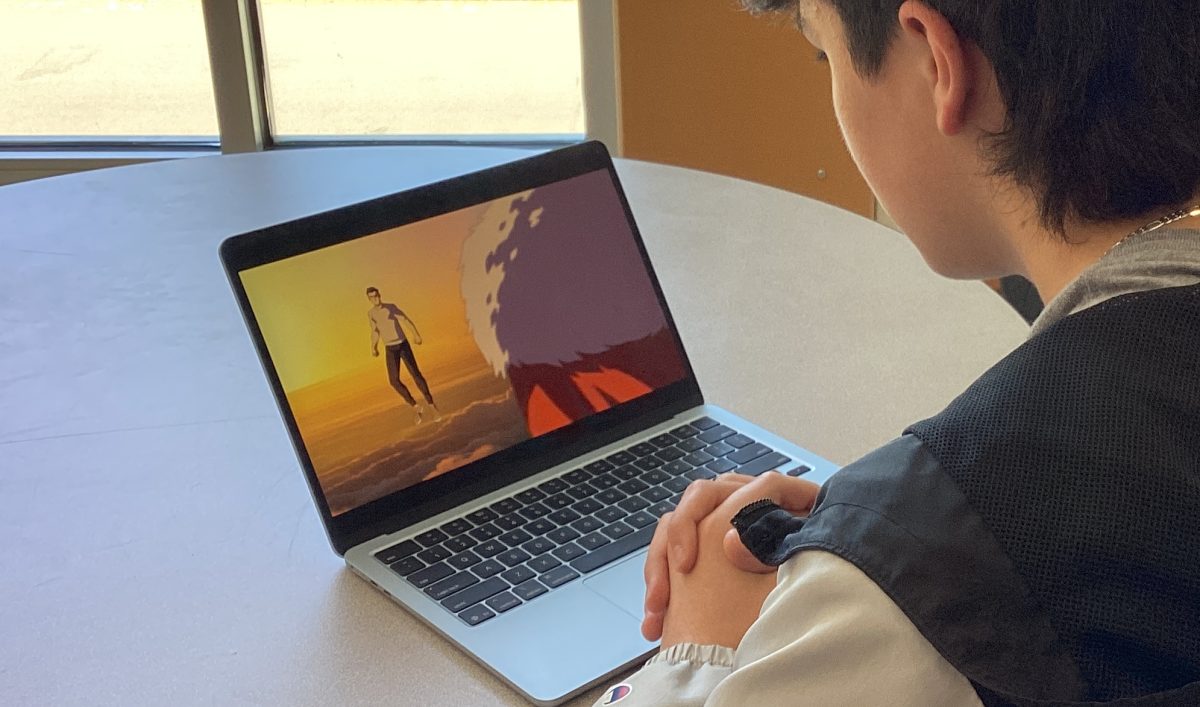

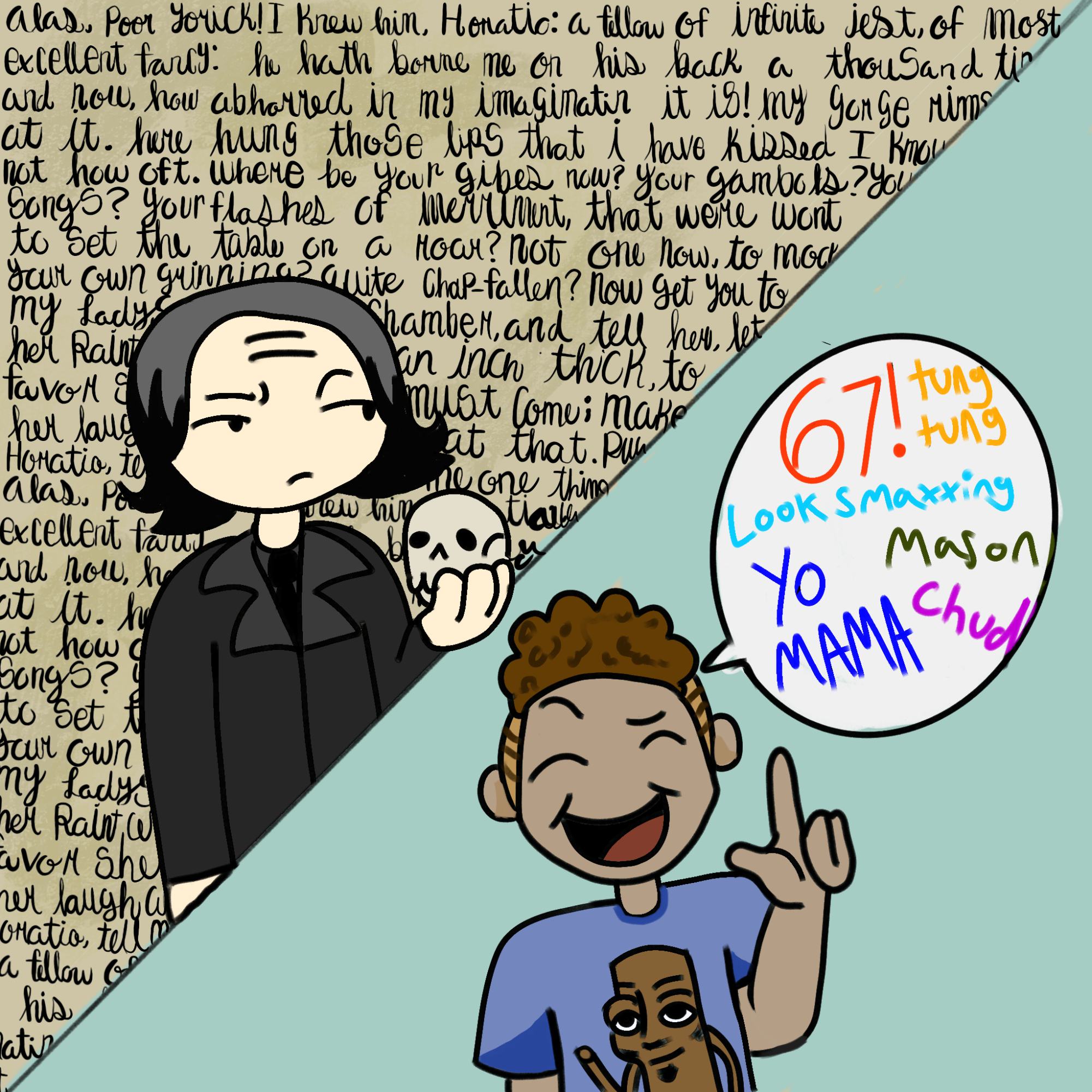
While diction and a generation’s vocabulary change over time, many in older generations wonder if Gen-Z is seeing a decrease in vocabulary and conversational skills, especially with digital communication and technology increasing.
“I’ve only noticed it because I’m a mom of teenage girls who are here, and so they’re constantly using words that I have never heard. And I think it comes from social media,” said Stacy Udo, the librarian at Olympia High School for the past 10 years.
More students are using social media and digital communication platforms, which contribute to shorter conversations, videos and more informal usage of language.
“Having a phone as the primary communication of students and young people, even people in my generation who text more than ever now, people use a lot of shorthand. So it’s not uncommon to see those kinds of things crop up in student-written work,” said Udo.
AP English teacher Timothy Snodgrass has also seen expanded vocabulary decrease since he started teaching at OHS 27 years ago. “I am drawn to student writing where the diction and the vocabulary are at a higher level because it wasn’t as unusual back then,” he said.
Some attribute the loss of vocabulary to decreased reading rates; however, neither Snodgrass nor Udo has seen much of a change in the amount of books high school students read over the last 10 years.
“Going through college, I didn’t have the social media that is available now. I didn’t choose to read for fun, even though I grew up an avid reader. There was a five-year time period where I had so much to do. If I had free time, I wasn’t going to sit and read. And it wasn’t until I was a couple of years out of college that the reading was intentional,” said Udo.
The course load of high school often leads to decreased reading rates. “We have kids in middle school who read every book in the library, and they get to high school, and we bury them. Reading often has, throughout my teaching career, at this level, tended to start burning out,” Snodgrass said.
While high school has historically limited students’ desire and time to read outside of class, this year, the library at OHS has checked out 3500 fewer books than the average number for the previous five years.
Udo attributes this to in-class novel studies not being as common in English classes this year. “Some English teachers [require] students to pick choice novels to read. This year, I’ve only seen that being done in the freshman classes. In years past, especially right on the heels of the pandemic, across the board, teachers [brought] back SSR [sustained silent reading], and gave kids time to do that.”
However, vocabulary and diction have always been an evolving part of the English language, and the increase in worldwide communication enabled by social media has sped up that evolutionary process. “I think it’s interesting, if you were to go to dictionary.com, there are some words that previously were never in our lexicon and have become standard words,” said Udo.

jester boy – May 24, 2026 at 12:21 am
I appreciate the insightful & nuanced take from Snodgrass. Language evolves and changes over time, which is neither a good or bad thing, just an immutable fact. I also wonder a bit about the OSD library numbers, since there isn’t a clear reason for a dramatic drop in library checkouts during this year in particular. I would expect it to be a gradual decrease. Maybe there’s other factors at play. Personally, I love to read books in my free time, but I’m a bit of a weird guy, haha.