
























In recent months, there have been major changes in the political fabric of the U.S, and as it shifts, the media has shifted with it.
These changes were seen before the election, when then presidential candidate Donald Trump steered away from interviews on traditional media platforms and towards podcasts, as a way to reach a new demographic of voters. This transition has led to deeper conversations in the media about where candidates should focus their interviews. Young men were seen as an unreachable voting bloc, but this strategy helped to change this perception and was a significant reason for Trump’s win.
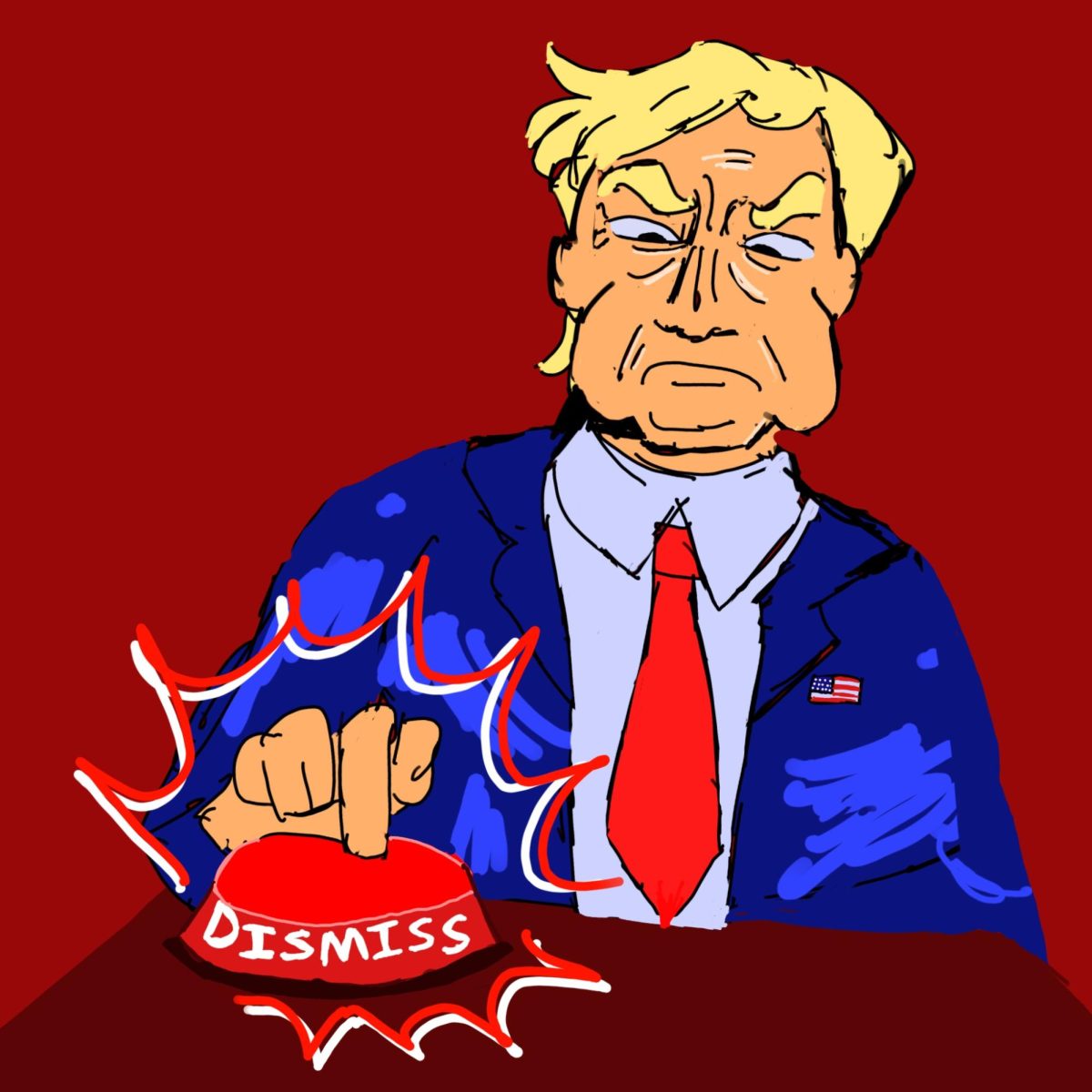
Once Trump was elected, a much darker change occurred. For many years, Republicans have claimed that the mainstream media has a liberal bias. They saw Joe Biden telling social media sites to enforce their policies around misinformation and hate speech as a violation of the First Amendment. When the election came around, Trump ran on being the “free speech president.” Instead of welcoming dissent, Trump has given deals for media companies to his donors, sued news organizations, and threatened their owners’ government contracts. This has caused these organizations to change the way they cover the president, which could catastrophically hurt the American people’s perception of reality.
After Trump’s reelection, media companies had already started to change their approach to handling the then-president-elect. A little over a month after the election, Disney decided to settle a suit Trump had filed against the media conglomerate. However, most legal experts believed that Disney would have won if the suit had gone to trial.
Disney’s choice to settle marked a trend among companies and other organizations hoping that settling would cause less long-term harm and save their government contracts. This trend continued with CBS settling a suit with Trump over 60 Minutes’ airing of an interview with Kamala Harris, while their parent company, Paramount, was trying to get a merger through the Federal Communications Commission. The suit was settled in July, and the merger was approved by the Trump-appointed head of the FCC in August. Although not officially a quid pro quo, the events’ proximity is suspicious.
This merger between Skydance and Paramount has allowed major Trump donor Larry Ellison’s son, David Ellison, to have more control over the media that the American people consume. After the suit was settled, there was a mass exodus of top staff for 60 Minutes. David Elison continued to change the media landscape by appointing Bari Weiss as Editor in Chief of CBS News.
Weiss first gained notoriety in her career as an op-ed writer for The New York Times. She criticized the Me Too movement and wrote an article titled “We’re All Fascists Now,” in which she details how the left has become more intolerant of views that don’t align with their own, but used tweets from a fake antifa Twitter account as evidence. After leaving The New York Times in 2020, she started her own media company called the Free Press, which has been in hot water over the years for articles that insufficiently provide evidence to support radical claims. Jonathan Last, editor of The Bulwark, sees Weiss as a symbol of Ellison’s larger goal because “if Weiss screws up CBS News, or the news division’s business goes pear-shaped, that hardly matters. She’s a lost leader for the larger project of tech lord consolidation.”
When Elison bought the Free Press and appointed Weiss to this new role, it was a shocking choice to many, as most Editors-in-Chief of TV news companies have reporting and TV experience, but Weiss had neither. Weiss also had more of a lean to her content, which used to be seen as a disqualifying factor for the head of one of the big three television news broadcasters. Last sees the choice as pure politics: “the Ellisons understand that in an authoritarian context they must transform their media company so that it is acceptable to the regime.” Another aspect of her hearing that raised some red flags was that instead of reporting to the News Director, she would report directly to Elison.
Elison’s control of CBS News is one in a long line of billionaire-owned media companies. This isn’t anything new, but more recently, these owners have been putting pressure on the editorial direction of their papers. Even before the election, The LA Times and The Washington Post both decided not to publish their editorial board endorsement. The latter was seen as a greater shock because the board had already written their endorsement of Kamala Harris, and Jeff Bezos, the Post’s owner, refused to publish it. The Washington Post had written presidential endorsements in every election since Watergate.
Then, in February, Bezos announced that the opinion section would focus on the core pillars of personal liberties and free markets. This choice is purely political by Bezos, as Amazon and Blue Origin, his rocket company, have many government contracts. Last sees Bezos’ actions as those of “a man who…is journalistically compromised by his business interests…Which is why the Post has been bleeding talent for a year.”
With control of big media companies left with the owners, and writers leaving, this has led to the rise of platforms such as Substack and more independent media companies. Abby Philip, host of “CNN News Night,” sees the constellation of media as hurting “the consumer of information. And it also is probably going to push more and more of those consumers to alternative media sources.” These platforms and growing companies greatly change the balance of our media ecosystem.
These news platforms work on an algorithm. Once you click on a news article you agree with, your feed becomes inundated with more articles with the same political tilt as them. This creates echo chambers because, instead of editorial sections of newspapers that show different opinions along the ideological spectrum on their homepage, these websites don’t have robust opinion sections. These companies have more of a lean to their content and identify more than traditional news organizations do with a certain party. Jon Favreau, host of “Pod Save America,” sees the trends of the past decade in journalism as very concerning, due to traditional media shrinking, “audiences now can get information from a million different sources, many of them for free, many of them not trustworthy.”
More people are reading or watching purely opinion-based stories. Although there are pros to more independent media companies, they don’t have the same corporate structure as traditional media, allowing for more editorial freedom, they have fewer resources for fact-checkers and more tilted coverage.
The fabric of how we consume media in this country is changing, and President Donald Trump has been one of the largest catalysts for this change due to his blatant corruption and corrosion of American journalism.