
























Two weeks before the Spring Festival, also known as the Lunar New Year, 7-year-old JY Ran had already begun shooting off fireworks with his friends.
This year, the holiday falls on February 17, marking the Year of the Horse, but many people in China begin celebrations weeks in advance.
Growing up in northern China, JY Ran experienced Chinese New Year celebrations in a way that differed significantly from those in the U.S. Fireworks and firecrackers echo at dusk throughout the season to scare off the evil spirits. “The sounds of firecrackers lasted all the way until the Lantern Festival on the 15th day of the lunar month,” Ran said.
Ran recalled how the “New Year spirit” feels completely different depending on where it is celebrated. In China, it seems that the entire society is synchronized around preparing food, traveling to see loved ones, and observing special traditions that revolve around a single event. In the U.S., even for people who care deeply about the Lunar New Year, it feels smaller but not less meaningful.
A holiday filled with sound, food, and reunion
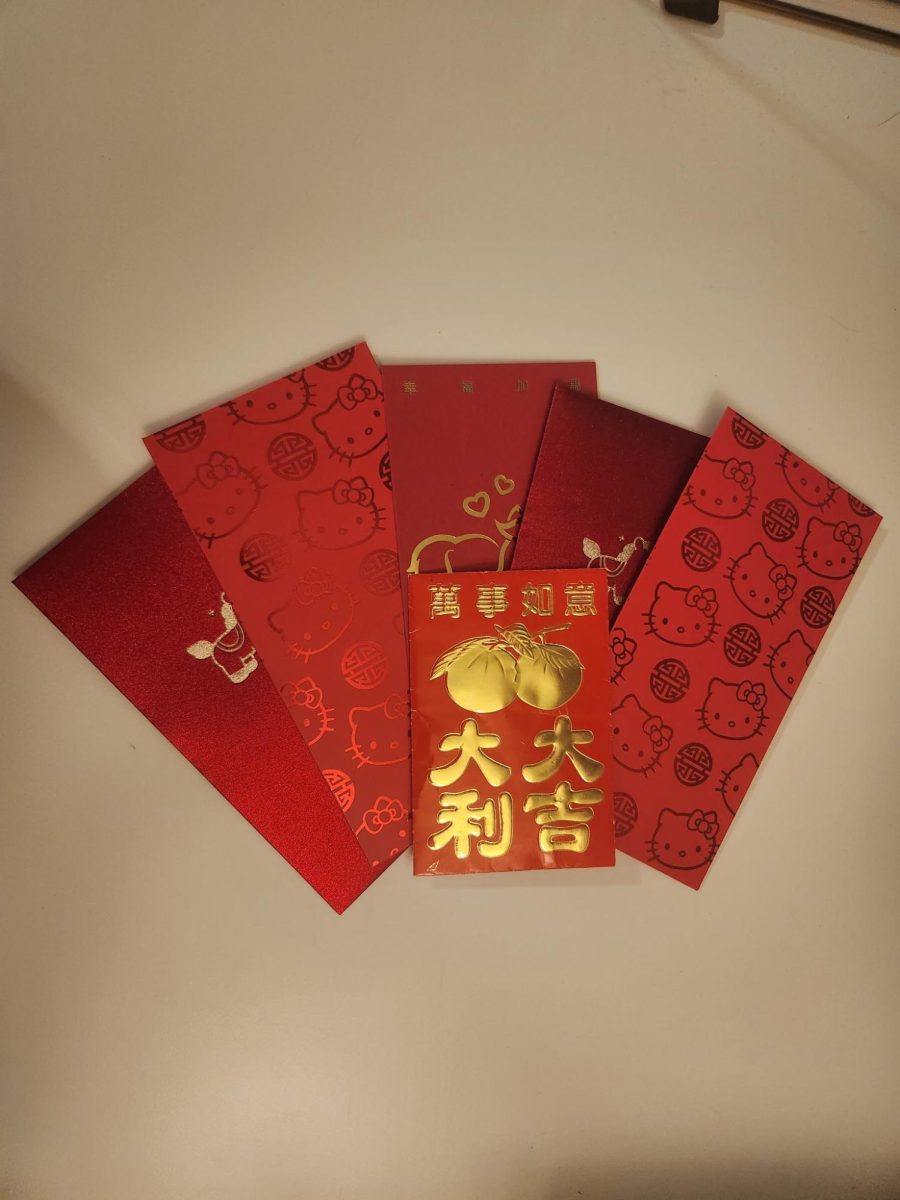
In Ran’s childhood, the Lunar New Year brought a lively atmosphere to his neighborhood rather than simply marking a date on the calendar. He said the most exciting moments were on Lunar New Year’s Eve and the 5th day of the new year, which is traditionally associated with welcoming wealth and good fortune. For kids, it also meant red envelopes.
“As children, we would receive red envelopes with lucky money from adults,” Ran said. When he was young, he sometimes received more than 10,000 RMB (1,434 USD) each year. “I would secretly keep one or two thousand RMB to buy video games,” Ran said, “while the rest my parents saved for me in a bank account for my future college education.” He recalled the time as a funny but warm distant memory.
Ran recalled his experience in China on New Year’s Eve. By night, children played together in one room while adults gathered in the living room to chat, eat snacks, play mahjong and watch the Spring Festival Gala on television. When the countdown to the New Year started, everyone regrouped, and at the exact moment the New Year arrived, “we would eat hot dumplings to celebrate the arrival of spring,” Ran said.
“I have never seen anything like this in the U.S.”
Ran experienced a major shift in his life in 2014, when he moved to the United States for college. Lunar New Year landed right in the middle of the academic calendar. There were no fireworks, no family reunion and no loud celebration throughout the season.
Since most of his New Year’s were now spent away from home, Ran sought out other Chinese students like him and celebrated with them. They cooked together and shared food that reminded them of Lunar New Year celebrations with family. “Cooking and celebrating with friends still created meaningful memories; it was just different in a good way,” Ran said.
The “friend-centric” New Year also happens in Olympia High School Senior Kalani Eberling’s celebrations.
For Eberling, the Lunar New Year is a time of celebration, but for his mom, it functions as the official New Year instead of the traditional Gregorian New Year on January 1. For Eberling, the holiday still matters, but not as much as it does for his mother. He’s lived in America for most of his life, and said the most traditional celebrations are “just a distant memory.”
Recalling his time growing up in China, celebrating the New Year, Eberling says that the key difference is the scale of the celebration. “Literally the entire family would gather into one area every Spring Festival,” he said, “Chinese extended families are enormous. Anybody with your surname within the town is likely a distant relative; I have never seen anything like this in the U.S., though.”
This points to one of the core reasons as to how Lunar New Year changes in America: many families try to keep their traditions, but often they don’t have enough relatives within a reasonable distance to recreate the massive scale of Chinese celebrations.
The luck, food, and the red envelope stay the same
Even though the celebrations are smaller, traditions still endure because they are portable in size.
For Eberling, the most memorable part is the red envelopes. “I honestly love the aspect of red envelopes,” he said, “because it’s like a yearly paycheck that promises prosperity in the upcoming new year.”
Food is another tradition that can still be enjoyed in America.“I honestly love the Kung Pao Chicken on New Year’s Eve, as well as the dumplings that the whole family makes together; it’s a very fun time for me,” said Eberling. Food is a centerpiece in Chinese culture, so it’s no surprise that the Lunar New Year heavily surrounds food and eating.
Games and social gatherings still exist in Eberling’s celebrations. Instead of a multi-day family gathering, Eberling described turning the holiday into a family-and-friend event. “I usually invite a bunch of friends and family to play games where you can win prizes,” he said, “or in some cases have to eat chicken feet.”
Although the celebration style differs from Chinese tradition, the meaning still remains: bringing people together to start the year with laughter, food and a good time.
Even China feels different now
One surprising part of Ran’s experience with the Lunar New Year was that it had vastly changed in China, and that it felt different when he visited his family in recent years.
Work has allowed him to return to China for Lunar New Year’s, but he said that the ‘New Year spirit’ he had felt when he was a child now seemed faint. One major reason is that environmental regulations have led to cities prohibiting fireworks and firecrackers during the holiday. Ran remembered the sounds of fireworks crackling, and the smell of gunpowder was a large part of the atmosphere that is now gone.
Traditions have changed, too. He remembered that the Spring Festival Gala was the anchor for the night when he was a kid, but now many family members scroll short videos and stream shows or dramas while chatting. Children also have more food choices now, sometimes ordering delivery instead of waiting for the traditional dishes.
In other words, the Lunar New Year hasn’t only changed for him when he moved to America, but it changed because the culture within China has shifted over the years.
What is the difference between ‘Chinese New Year’ and ‘Lunar New Year’?
Online, the holiday’s name is often debated between “Chinese New Year” and the “Lunar New Year.” Ran said he is aware of the debate but doesn’t find the label to be all that important because it doesn’t define the holiday’s meaning. Many cultures celebrate a new year tied to lunar or agricultural cycles, some influenced by China and some developing their own traditions.
What matters is what the Spring Festival is all about: it marks a reset, a beginning, and a time of family reunion. Even if people are busy or too far away, they try their best to return home in spirit through food and tradition or physically because the holiday creates a pull towards close family and friends.
Ran described that pull toward home as being innate, “like a built-in system rule… something deeply embedded, like underlying computer code that guides people back to their roots and to the warmth of home.”
In the U.S., the celebration doesn’t always look like a townwide event or two straight weeks of noise and ritual. Sometimes it looks like dumplings with friends in a small apartment. Sometimes it looks like a weekend dinner followed by engineering homework. Sometimes it looks like red envelopes and games, kept alive because someone decided they still matter.