
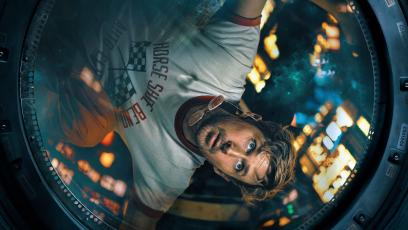






On Saturday, January 24, rock climber Alex Honnold will attempt to ascend the 508-meter-tall skyscraper Tapai 101 without a rope. His ascent will be live-streamed on Netflix.
Free soloing is an extreme form of rock climbing where the climber doesn’t use a rope, so if they fall, they die. For this reason, it’s challenging to morally capture free soloing on camera. This was accomplished masterfully in the massively successful 2018 documentary Free Solo, which launched both the sport and its undisputed leader, Alex Honnold, into mainstream consciousness. However, Skyscraper Live, the livestream of Honnold’s ascent of Taipei 101, crosses all ethical lines.
El Capitan vs. Taipei 101
Free Solo focused on Honnold’s solo ascent of the iconic El Capitan, a rock formation in Yosemite Valley that’s often referred to as Rock Climbing’s Mecca. Honnold’s solo ascent of El Cap in just under four hours was among the greatest climbing achievements of the century.
Soloing Tapai 101, a skyscraper in the heart of Taiwan’s business district, doesn’t have the same significance. Urban climbing is incredibly niche and not generally lumped in with more traditional forms of climbing. Scaling the equivalent of three space needles stacked on top of each other requires superhuman endurance, but Taipei 101 does not offer a world-class climber like Honnold much of a challenge beyond its scale.
This raises the question of why Alex Honnold is climbing Tapai 101 at all. It is not culturally significant to climbers. It is not that athletically demanding compared to Honnold’s other projects. Considering Honnold has only attempted a few urban climbs in his career, it is not believable that Taipei 101 represents a longtime goal. The obvious conclusion is that Skyscraper Live is not for rock climbers, and it’s not for Alex Honnold. It’s for everyone else. It’s a gimmick. Tapai 101 doesn’t need to mean anything to Honnold or his community. Its impressive sounding scale is all Netflix needs to get non-climbers to tune in.
Filming makes free soloing more dangerous
Free Soloists might seem like modern daredevils, the Evel Knievels of the 21st century. But the appeal of Free Soloing is not stakes, spectacle, or adrenaline. Soloists seek to enter a state of intense concentration and fluidity that climbers call flow state. But reaching flow state requires perfect conditions. If a climber is distracted because people are watching, or if they feel pressured to commit to an ascent even when they’re not feeling it, the results would be deadly.
The fact that the filmmakers of Free Solo were all experienced climbers and friends of Honnold was key. On Honnold’s first attempted ascent of El Cap, he bailed. Had the presence of a film crew pressured Honnold to stay on the wall, he would have very likely died on that ascent.
Live streaming a free solo is reckless. It puts insurmountable pressure on the climber. Honnold can not bail 10 ft up Tapai 101 when thousands of people tuned in to see him summit. Documentaries put a degree of separation between the climber and the audience so that the climber can be present in the moment. He can not enter a flow state with the whole world actively watching.
Sensationalizing risk and death
There are two reasons to watch Tapai 101. The first reason: it’s cool. Soloing a skyscraper seems like the most hardcore thing in the world. The second reason: seeing whether or not Honnold dies. Both are problematic.
The appeal of extreme sports should not be how dangerous they are, and the media has a responsibility not to associate danger with achievement. Free Solo 2018 knows this and paints a nuanced portrait of Alex and his sport. But every aspect of Skyscrapers’ lives is supposed to emphasize how cool it is. Climbing a skyscraper is a gimmick. Livestreaming the ascent prevents meaningful exploration of Honnald’s mindset.
By glorifying risk, Skyscraper Live also glorifies its potential consequences. This could not be made more apparent by the trailer. Alex is interviewed over top a video of himself training on a kilter board. When he says, “if you fall,” the video slows down as he hangs midair. Cut to a camera descending the length of the skyscraper. Cut to black on the words “you’re going to die.” Obviously, Free Solo 2018 addresses the danger of what Honnold is doing, but it doesn’t treat the idea of Honnold falling as some epic, climactic free fall like Skyscraper Live does.
Future Implications
Skyscraper Live will mark the first high-profile live stream of free soloing in America. If successful, it could launch a new form of content for streaming services.
Tapai 101 is relatively low risk for Honnold. But what about the next livestream? The next route? The next soloist? Will these stunts keep getting bigger and bigger, more and more dangerous? Does it stop when somebody falls?
Netflix is opening Pandora’s box. Live streaming free soloing is inherently immoral. Encouraging athletes to perform these stunts reduces real people into heroes in action movies where the spectacle is more important than their lives.