












Benito Antonio Martínez Ocasio, or Bad Bunny, is currently on a home run with his career, winning Grammys and quickly becoming one of the most famous pop artists of this generation.
Kate Chan, a Spanish teacher at OHS, first started listening to Bad Bunny about five or six years ago. “He used a lot of Puerto Rican slang,” Chan said. This makes listening to his music somewhat difficult for people not fluent in Spanish, but it draws attention to his roots in Puerto Rico. “He’s representing his culture,” Chan said.
Bad Bunny’s newest album “DeBÍ TiRAR MáS FOToS” (DtMF) is simply amazing. All of the music is upbeat and exciting. Despite all of the songs being in Spanish, anyone can enjoy them. “You don’t have to understand what he’s saying to appreciate the message he’s putting out,” Chan said. One major standout in the album is the use of climactic pauses. The pauses bring a human element to the music, creating some tension, followed by pure satisfaction.
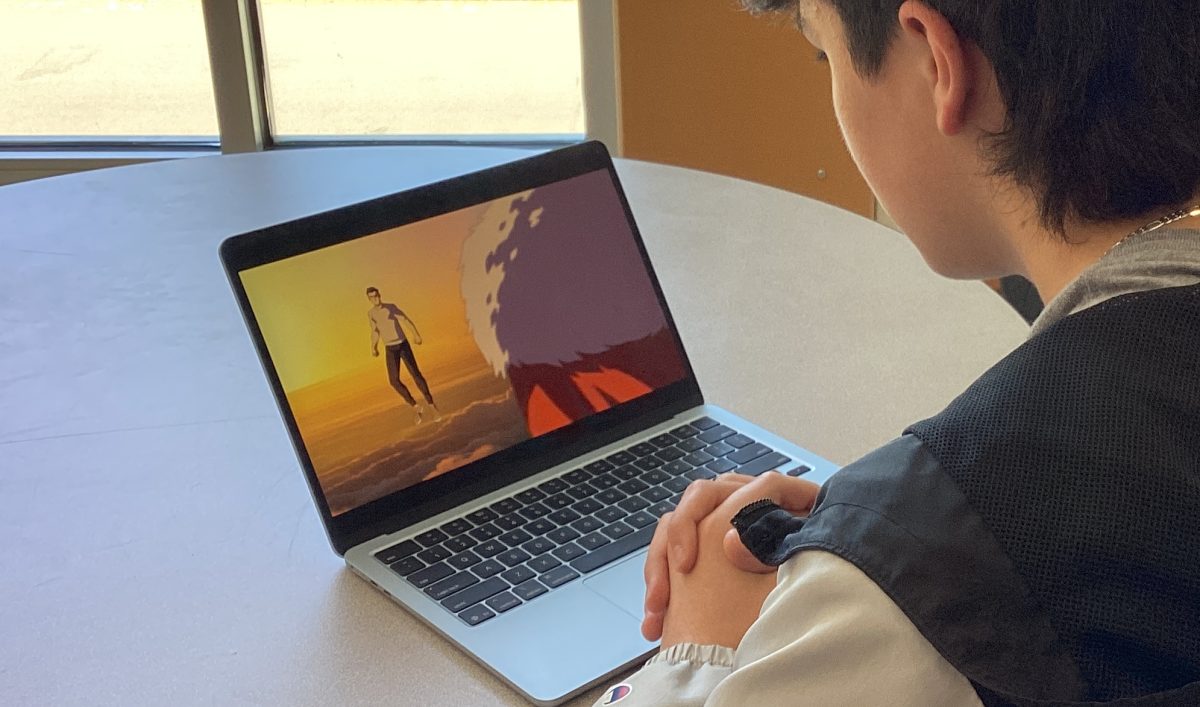
The short film “DeBÍ TiRAR MáS FOToS,” directed by Bad Bunny, was a promotion for his album, also called “DeBÍ TiRAR MáS FOToS.” It follows the story of an old Puerto Rican man going about his day. It portrays the changes in Puerto Rico and how the people keep the love and tradition alive.
Even though he is primarily a singer, Bad Bunny has been a major advocate for the anti-ICE movement. At his Grammy speech, he and many other famous artists spoke out against Immigration and Customs Enforcement. “ICE out,” Bad Bunny said. Along with speaking out against ICE, Bad Bunny has always brought attention to the territory of Puerto Rico, being a major role model for many Latinos.
On top of the recent success of his album, Bad Bunny also performed at the Super Bowl halftime show. His performance was the first halftime show to be sung completely in Spanish, making history both as a passive protest for Puerto Ricans and a symbol of unity for the Americas. “I think it’s amazing,” Chan said.
While most of the country is content with his performance, some members of MAGA are heavily protesting it. Their own halftime show, called “the all-American halftime show,” featuring Kid Rock, was a huge flop, obtaining about 19 to 25 million views, compared to the actual Super Bowl halftime show, which got more than 130 million views.
The choreography of the halftime show was simply stunning. About four hundred dancers backed up Bad Bunny’s extraordinary performance. The set only enforced the incredible dancers’ performance. A beautiful set that portrayed a natural Puerto Rican environment and featured many classic Latino traditions like piguria stands and coconut vendors, along with the large sugar cane field itself, which was built of people wearing bush costumes, and a casita (little house).
The performance itself was just as outstanding as the choreography and the set. Bad Bunny performed some of his biggest hits like “DeBÍ TiRAR MáS FOToS” and “BAILE INoLVIDABLE.” Guest singer Lady Gaga also performed one of her most popular songs, “Die with a Smile.”
A major highlight of the show was the real wedding before Lady Gaga’s performance. The couple got engaged in Oregon just months before. A representative for Bad Bunny informed him that he had been invited to their wedding. Instead, he invited them to have their wedding at the Super Bowl.
While the overall consensus about the half-time show was overwhelmingly positive, one major complaint was from people inside the stadium. The set was primarily designed for viewers watching from home, not the stands. The view from the stands was very poor, most people were only able to see Bad Bunny for about two minutes throughout his entire performance. This is understandably frustrating, as people at the game paid upwards of six thousand dollars for tickets.